Beyond the Taboos: Uncovering the Christian Philosophy of Desire and Sexual Market Value, Part 1, Sex 101
This is background for the Sex 101 podcast, and the live interview will be posted.

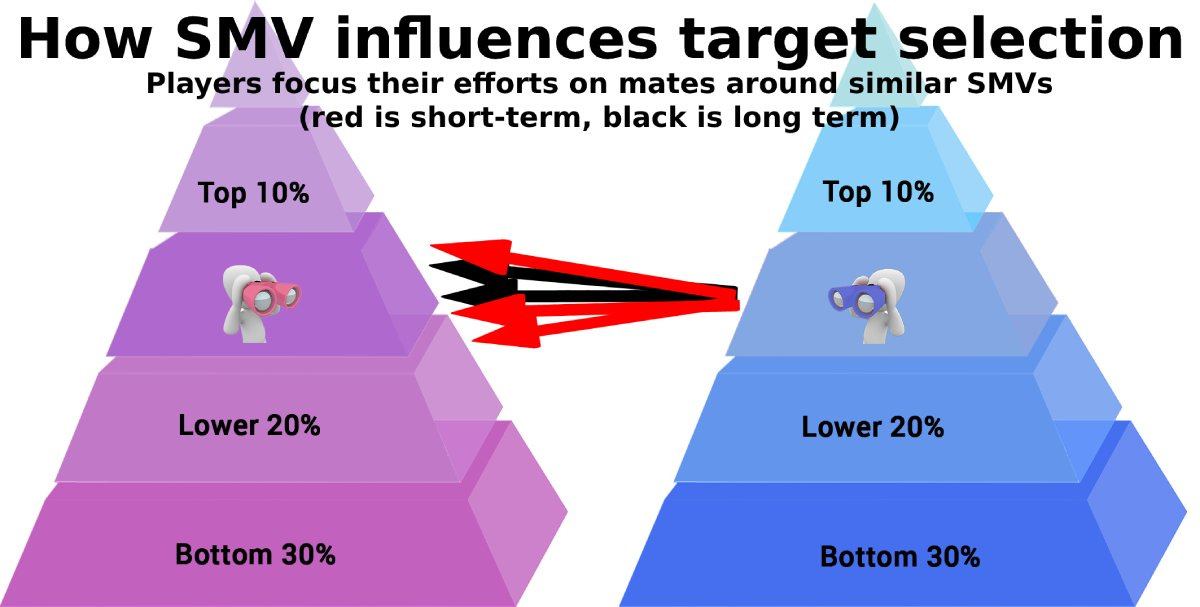
Sexual Market Value Theory
We define sexual market value as:
Sexual Market Value (SMV) refers to an individual’s overall desirability as a mate, determined by a combination of factors that determine their perceived value in the mating market.
In simpler terms, the sexual market value is an individual’s level of attractiveness.
What Christians Actually Believed About Sex, Desire, and Human Value
A Substack Essay & Podcast Script
An episode of Sex 101 with Daniel and Mick
For centuries, the Christian perspective on intimacy has been reduced to a list of "thou shalt nots." But beneath the surface of traditional morality lies a radical, complex philosophy regarding the nature of human desire and the intrinsic worth of the individual. To truly understand what Christians believed about sex, we have to look past the modern taboos and explore how early believers redefined the body as a temple—a shift that forever changed the world’s understanding, if they grasped the Western concept of individual rights and personal dignity.

I. The Market Nobody Invented: Desire and Value Before Modernity
I’ve been reading this article online — it’s called “What Is Sexual Market Value, and How to Increase It” — and it’s everywhere. People are using the phrase “SMV,” sexual market value, like it’s a perfectly normal way to talk about dating. Where does that idea even come from?
It’s a fair question, and I want to take it seriously rather than just dismiss it, because the article you’re describing — the one by Lucio Buffalmano (credit to retained graphics) — is actually doing something interesting. Buffalmano is drawing on evolutionary psychology and what’s sometimes called the “manosphere,” but he’s trying to clean it up, make it respectable. His core claim is that human beings are implicitly assigning value to each other in the mating marketplace — just like they do in an economic marketplace — and that understanding this dynamic gives you leverage to improve your odds of attracting a desirable partner. It’s a transactional framework, and on the surface, it sounds new, very twenty-first century. But here’s the thing: the idea of sexual value — the notion that human beings have a kind of relational worth that can be estimated and improved — is ancient. The novelty isn’t the idea. The novelty is stripping away every moral, spiritual, and communal dimension the idea used to carry.
When you go back to the early Jewish tradition, you find something fascinating. The rabbis of the Talmudic era — we’re talking roughly the first through fifth centuries of the Common Era — spent enormous energy discussing what makes a person a desirable spouse. In tractate Kiddushin, the rabbis enumerate qualities in a potential mate with a frankness that would make a modern dating coach blush. Lineage matters. Character matters. Piety matters. Even physical vitality has a place in the conversation. But here’s what’s crucial: all of these qualities are understood in relational and covenantal terms, not transactional ones. You are not assessing a commodity. You are evaluating a potential covenant partner. The Talmud records Rabbi Akiva saying that a man should be willing to descend a step in social status to marry a woman of noble character because character is the foundation upon which everything else rests.
Compare that to Buffalmano’s framework. He talks about physical attractiveness, social status, financial resources, confidence, and something he calls “dark triad” traits as components of male sexual market value. Some of those are common sense — financial stability matters, confidence matters, and health and fitness matter. Nobody is shocked by that. But when you read his list carefully, you notice that inward character — honesty, kindness, fidelity, the capacity for self-sacrifice — essentially doesn’t appear. Or if it does, it’s as a subpoint under social skills. Virtue, in the classical sense, is invisible.
That absence is telling. Because from Aristotle through the Church Fathers through the rabbinic tradition, the consensus was not just that virtue is morally important — the consensus was that virtue is attractive. Aristotle, in his Nicomachean Ethics, argued that a person of genuine excellence, what the Greeks called arete, naturally draws others toward them. The magnet isn’t posturing or status signaling. It’s the coherence of a well-formed soul. Clement of Alexandria, writing in the late second century in his Paedagogus, made a similar argument: the adornment that truly beautifies a person is not cosmetic but moral — “a holy life,” he writes, “is the beauty of the soul.” Now, you can debate whether he’s overstating it. But he’s pointing at something the sexual market value framework almost completely ignores: the idea that human beings, across centuries, have consistently found goodness beautiful. Not always, not perfectly, not without complication — but as a pattern, virtue has never been unattractive.
So when we talk about sexual market value, we’re engaging a very old conversation about human worth and attractiveness, but we’re doing it with a severely impoverished vocabulary.
In conclusion, the conversation about sexual value is ancient, but what elevates the Christian and Jewish tradition from modern transactional frameworks is not prudishness — it’s the insistence that inward character is genuinely, not merely aspirationally, attractive.
II. What the Body Means: Early Christian Theology of Flesh and Desire
There’s a common assumption that Christianity is basically anti-sex — that the Church Fathers thought the body was evil and desire was something to be suppressed. How accurate is that?
Mostly wrong, but not without some basis. Let me untangle it, because it matters enormously for how we approach any theological conversation about sexual value.
The accusation usually points to figures like Origen, who famously castrated himself — though that story is disputed — or to Jerome, who wrote with such vehemence about sexual temptation that you’d think he was personally at war with half of Rome. And there’s something real there. A significant current of early Christian thought was influenced by a Platonic dualism — the idea that the soul is essentially a divine spark trapped in corrupted matter — that led some thinkers toward a suspicion of bodily experience in general and sexual desire in particular. When Tertullian, writing in the early third century, called women “the devil’s gateway” in his De Cultu Feminarum, he was expressing something that was in the air in his intellectual milieu, not a settled Christian consensus.
But here’s the corrective. The mainstream of early Christian theology — anchored in the Jewish scriptures it inherited — was firmly committed to what we call creation theology. God made the material world. God called it “very good” Genesis 1:31. The body is not a cage for the soul; it is part of the imago Dei, the image of God in human beings. When the Gospel of John opens with “the Word became flesh and dwelt among us,” it is making the most radical possible anti-dualist claim: that God himself entered embodied existence. God did not merely appear to have a body, as the Gnostic heretics claimed. He had one.
This is what makes Irenaeus of Lyon, writing in the late second century in his Against Heresies, such an important corrective voice. Irenaeus is fighting precisely the Gnostic tendency to despise the material world. His great phrase is that “the glory of God is a living human being” — gloria Dei vivens homo. He meant a fully alive human being: body, soul, and spirit integrated and functioning. Against the Gnostics who wanted to save the soul from the body, Irenaeus insists that salvation is the redemption of the whole person. The body matters. What we do in the body matters. And — here’s the pivot — what the body desires is not simply sinful noise to be silenced. Desire, in its right ordering, reflects the structure of creation.
The Church Father who thinks most carefully about this is, of course, Augustine. And Augustine is complicated in ways that people rarely represent fairly. In his Confessions, he famously prays, “Lord, make me chaste — but not yet.” That line gets quoted as evidence of his tortured relationship with sexuality. But read further, and you find something more subtle. Augustine’s problem with sexual desire in his pre-conversion life was not that desire existed — he believed desire for union, for beauty, for love was inscribed in human nature by God. His problem was that desire in a disordered soul attaches itself to the wrong things, or pursues the right things in the wrong way. His famous phrase, “our heart is restless until it rests in Thee,” is not a condemnation of desire. It is a mapping of desire’s proper trajectory.
Now, how does this relate to the sexual market value conversation? Buffalmano’s article treats desire as essentially a constant — a biological drive whose objects are determined by evolutionary pressures and whose fulfillment is the goal. The tradition says something more interesting: desire is real, desire is not evil, but desire is directable. It can be formed or malformed. A person whose desires are well-ordered — who wants the right things in the right way — has a kind of radiance that the person whose desires are chaotic and self-centered does not. This is partly what the tradition means when it speaks of chastity: not the suppression of desire, but its integration and ordering. John Paul II’s Theology of the Body lectures, delivered in the 1980s, are essentially a twentieth-century attempt to recover this patristic intuition in modern language — and they remain one of the most sophisticated philosophical treatments of sexual desire in any tradition.
The body, in the Christian view, is a sacramental reality. What we do with it signifies something beyond itself.
In conclusion, the early Christian tradition was not anti-body — its mainstream insisted on the goodness of creation and the redemption of the whole person — and this has real consequences for how we think about desire, attraction, and the meaning of sexual experience.

III. The Song No One Talks About: Erotic Literature in the Biblical Tradition
If desire is good, does the Bible actually celebrate it anywhere? Or is it mostly about rules and restrictions?
The Song of Songs. Full stop.
If you want evidence that the biblical tradition does not view erotic desire as inherently sinful, you need to spend some time with what is also called the Song of Solomon or Canticles. It is eight chapters of some of the most vivid erotic poetry in any ancient literature. The woman’s desire for her beloved is expressed with a directness that made later interpreters uncomfortable enough to reach for allegory — surely, they said, this must be about the love between God and Israel, or between Christ and the Church. And those allegorical readings have real depth. But the great rabbi Akiva, when debating whether the Song belonged in the canon, reportedly said: “All the ages are not worth the day on which the Song of Songs was given to Israel, for all the Writings are holy, but the Song of Songs is the Holy of Holies.” He was not talking about a metaphor for divine love. He was validating something about human erotic experience as genuinely sacred.
The Shulammite woman in the Song says: “Let him kiss me with the kisses of his mouth: for your love is better than wine.” She describes her beloved’s body in the language of nature and architecture — cedar and marble and lilies — and she is not ashamed. She goes looking for him in the night. She is active in her desire, not passive. The poem presents female desire as legitimate, beautiful, and worth celebrating. That’s not a small thing in ancient literature, and it gets even smaller in the way Christianity often presents itself.
Gregory of Nyssa, in his Commentary on the Song of Songs — fourth century, one of the Cappadocian Fathers — develops the idea that eros, rightly ordered, is the energy of the soul’s ascent toward God. He’s drawing on Platonic language, but the move is characteristically Christian: he doesn’t abandon the erotic dimension of the poem; he elevates it. He sees in the longing of the Shulammite an image of the soul’s longing for union with the divine. What’s striking is that he can only do this because he takes the erotic reality of the poem seriously. The allegory works because the literal level is genuine.
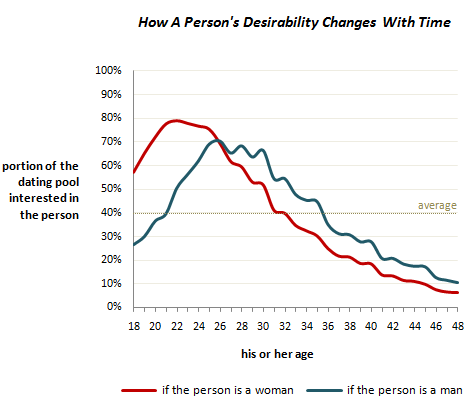
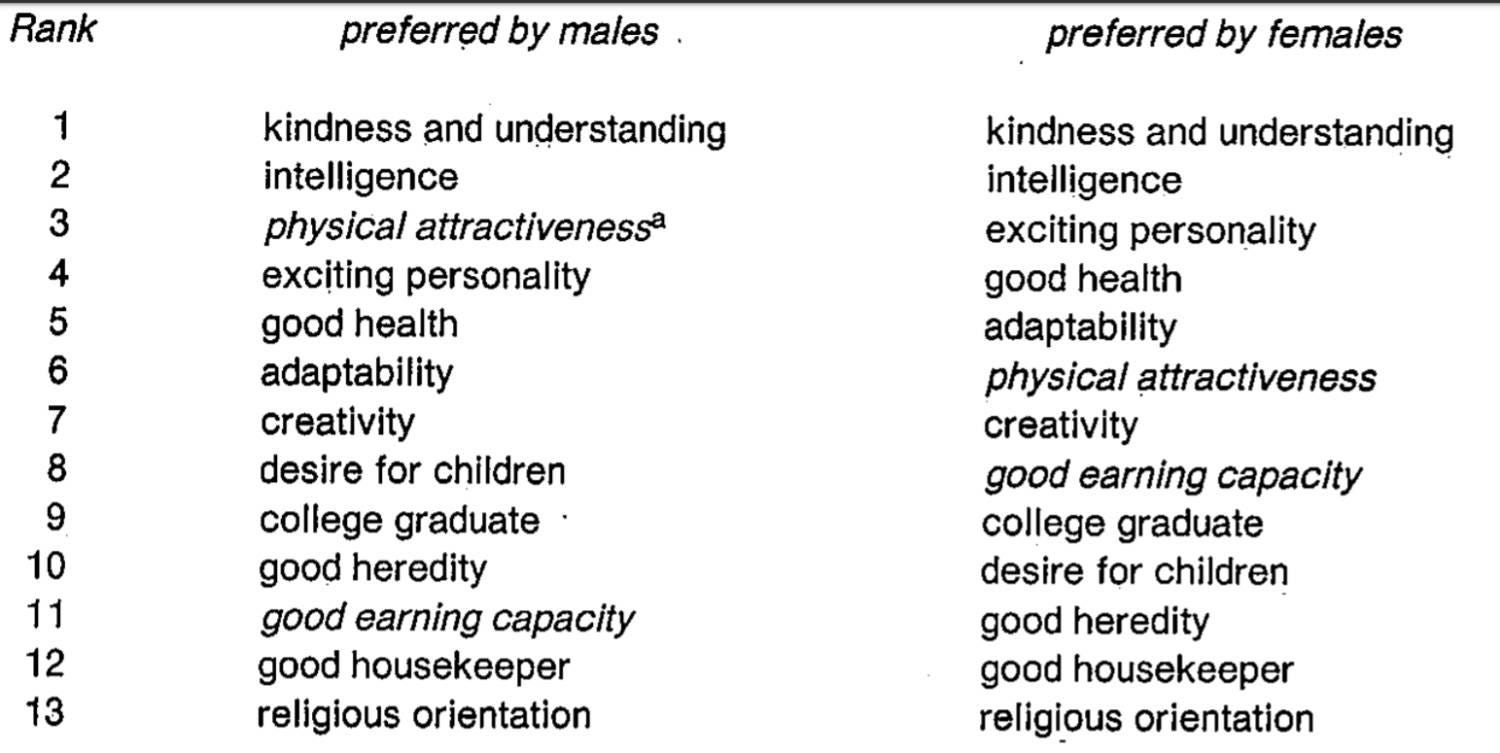
This has an interesting implication for the sexual market value conversation. Buffalmano’s article, like most contemporary dating advice, talks about attraction as though its object is essentially fixed — men want youth and beauty, women want status and resources, and the game is optimizing your SMV to attract the best available partner. There’s research behind some of those generalizations. David Buss’s cross-cultural studies on mating preferences are based on real data. But they describe statistical patterns across populations; they don’t capture what any particular person, shaped by their history and longings and spiritual condition, actually desires.
The Song of Songs presents a picture of desire that is radically particular. The Shulammite doesn’t want a man. She wants this man, with his specific presence and voice and history. “His left hand is under my head,” she says, “and his right hand embraces me.” This is not an abstract attraction to a set of SMV markers. It’s the knowledge of another specific person whose particularity has become precious. The Song presents erotic love as inherently personalizing — it refuses to treat the beloved as a type or a commodity.
And that, in the end, is one of the deepest tensions between the sexual market value framework and the biblical tradition. The market framework is, by nature, aggregate and generalizing. The Song is insistently particular.
I want to mention something about music here, because it’s relevant. When Ian Hunter sang “I Need Your Love”— that restless, searching song about desire and distance and longing — there’s something in its urgency that touches this theme.
The erotic and the spiritual and the longing for connection get tangled up in good music the way they do in the Song of Songs. There’s a reason people have always written love songs. The desire is real and worth singing about.
In conclusion, the Bible’s own erotic literature — especially the Song of Songs — presents desire not as something to be managed or suppressed but as a force that, at its best, personalizes and elevates rather than reduces the beloved to a set of market-assessable traits.

IV. Paul, Marriage, and the Ethics of Mutual Belonging
The Apostle Paul has a reputation for being pretty restrictive about sex. Was he? And what did he actually say about marriage?
Paul is one of the most misread figures in Christian history when it comes to sex and marriage, and the misreading goes in both directions. Some people quote him to argue for repression; others cherry-pick a few lines to make him sound like a proto-feminist. The truth is more interesting than either.
The key text is I Corinthians 7, and you need to read it in context. Paul is writing to a community in Corinth that has been influenced by an ultra-ascetic faction — people who apparently believed that the more spiritual you were, the less you needed physical things, including sex, including marriage. Some of them were claiming this as a Christian virtue. Paul’s response is nuanced. He does say, “It is good for a man not to marry” — that line gets quoted constantly. But read the next twenty verses. He immediately qualifies it: “But since sexual immorality is occurring, each man should have sexual relations with his own wife.” He goes on to say something remarkable: “The wife’s body does not belong to her alone but also to her husband. In the same way, the husband’s body does not belong to him alone but also to his wife. Do not deprive each other.”
That is a revolutionary statement in a first-century context. Paul is asserting mutual bodily authority in marriage — both partners have claims on each other’s physical presence. This is not patriarchal dominance; it’s mutual belonging. And note: he says the husband’s body belongs to the wife. That kind of reciprocity was unknown in the ancient world. John Chrysostom, preaching on this passage in the late fourth century in his Homilies on First Corinthians, dwells on this mutuality at length. He sees in Paul’s instruction a vision of marriage as a community of equals in the most intimate possible sense.
Now, Paul does express a personal preference for celibacy in this same chapter. “I wish that all men were as I am” — unmarried and focused on the Kingdom. But he’s careful to say this is his personal preference, not a command. He attributes it to the pragmatics of his situation — “the present crisis,” he mentions — and to the freedom that celibacy gives for undivided devotion to God. This is not anti-sex. It’s a prioritization argument. And importantly, Paul distinguishes between his personal opinion and a divine command with an almost modern-sounding epistemic humility: “I have no command from the Lord, but I give a judgment as one who by the Lord’s mercy is trustworthy.”
What does this have to do with Buffalmano’s sexual market value framework? One of the central assumptions of SMV theory is that each individual is an autonomous agent navigating a competitive marketplace, seeking to maximize their returns. The Pauline vision of marriage is its precise inversion: two autonomous individuals voluntarily surrendering their autonomy and entering a state of mutual belonging. “You are not your own,” Paul writes in I Corinthians 6 — though in a different context. The principle holds: the Christian vision of covenant relationship is one in which the self is given, not leveraged.
This creates a paradox. Buffalmano’s framework says: improve your SMV to attract the best partner you can get. The Pauline-Christian framework says: become the kind of person who can give yourself fully to another person. These are not the same project. The first is essentially self-marketing. The second is character formation for covenant.
That’s not to say the two are entirely opposed. A person who works on their health, their emotional maturity, their financial responsibility, their social confidence — that person is both a better catch by SMV standards and a more capable covenant partner. The overlap is real. The divergence is in the why and the what behind the project.
Let me bring in the Letter to the Ephesians here, because Ephesians 5 — the famous “wives, submit to your husbands” passage — is almost always read in isolation from what comes immediately before: “Submit to one another out of reverence for Christ.” The mutual submission frame sets everything that follows. The husband is then told to love his wife “as Christ loved the church and gave himself up for her.” The Christological parallel is stunning. Paul is not giving men authority and women submission. He’s telling men that real authority in marriage looks like the cross — like self-giving love, like death to self-interest.
That’s a very different model than sexual market optimization.
In conclusion, Paul’s vision of marriage is built around mutual belonging, covenant faithfulness, and self-giving love — a framework that overlaps with, but ultimately transcends and complicates, any transactional model of sexual attraction.

V. Virtue and Attraction: Does Character Actually Matter?
As we begin to wrap up, here’s a skeptic’s question. You’re saying the tradition insists that character is attractive. But we can all think of charming narcissists who do extremely well in the dating world. Is the tradition just wrong about this?
The skeptic’s challenge is fair, and I want to take it seriously before I complicate it. Yes, some charming narcissists do well — for a time — in the mating market. And Buffalmano’s article, to its credit, actually names this directly. He mentions “dark triad” traits — narcissism, Machiavellianism, and psychopathy — and notes that research does show these traits can be attractive, particularly in short-term mating contexts. He cites this somewhat ambivalently, which I respect. He’s not quite recommending people cultivate psychopathy, but he’s acknowledging that the market doesn’t always reward virtue.
So is the tradition wrong? I think the more precise answer is that the tradition is right about the long run in ways that short-term studies and casual observation miss.
The research worth looking at here is the longitudinal work on relationship satisfaction. Studies tracking couples over decades — like the Gottman Institute’s research on marital stability — consistently find that what predicts lasting partnership satisfaction is not initial physical attractiveness or status, though those create initial interest. What predicts satisfaction over time is something much closer to what the classical tradition called virtue: emotional regulation, trustworthiness, generosity, the ability to repair conflict, and genuine interest in the other person’s flourishing. John Gottman’s “Four Horsemen” — contempt, criticism, defensiveness, and stonewalling — are essentially an empirical catalogue of vices in relational form. The antidotes he prescribes — respect, curiosity, humility, repair — are virtues.
Now, the church fathers didn’t have access to longitudinal relationship studies. But they had something else: millennia of observed human experience, transmitted through scripture and tradition. Augustine, in his City of God, makes a distinction between the goods that belong to the City of Man — power, wealth, pleasure, status — and the goods that belong to the City of God — justice, peace, love, beauty in its highest form. The City of Man’s goods are real but temporary; they corrupt when made ultimate. The City of God’s goods have staying power because they’re ordered toward something permanent.
That framework maps surprisingly well onto what the psychology shows. Chasing SMV — maximizing attractiveness-by-market-standards — is a City of Man project. It can get you into a relationship. It struggles to keep you there, and it doesn’t form the habits of soul that make long-term intimacy possible. Character formation — which is what the tradition actually commends — is a City of God project. It’s slower. It’s less dramatic. It doesn’t produce the same initial attention that a well-crafted personal brand does. But it builds something that can last.
I want to bring in Stoic thought here, because it adds texture. The Stoics — Epictetus, Marcus Aurelius, Seneca — were deeply influential on early Christian thinkers, and they had a sophisticated account of desire and virtue that reinforces this point. Epictetus, himself a former slave who became one of the most influential philosophers of the ancient world, distinguished between what is “up to us” — our judgments, desires, and the habits we cultivate — and what is “not up to us” — external circumstances, including how others evaluate us. He would have been contemptuous of the SMV framework, not because it cares about appearance and status, but because it locates the source of your worth outside yourself, in other people’s assessments. That’s precisely what the Stoics called a false good — something real but not ultimately within your control, and therefore a dangerous thing to build your identity on.
There’s a song by Ian Hunter — “Once Bitten Twice Shy” — that captures something of this in popular music.
The narrator has been burned, is guarded, is calculating his risks. It’s an honest portrait of someone who’s been treating relationships transactionally and learning from the wreckage. The wisdom the tradition commends isn’t naive openness; it’s the formation of a self sturdy enough to love genuinely without constant calculation.
What the Church Fathers consistently affirm — from Clement of Alexandria’s Stromata through Ambrose’s On the Duties of the Clergy — is that virtue is not merely instrumentally useful. It is, in a deep sense, constitutive of the kind of person who can actually flourish in a relationship. You can’t hack your way to genuine intimacy any more than you can hack your way to genuine friendship. You have to become the kind of person capable of it.
In conclusion, the tradition’s insistence that character is attractive is not naïve idealism — it’s supported by longitudinal relational research, ancient philosophical insight, and a richer account of human flourishing than the short-term data on dark triad appeal can provide.


The Literary CPR Playbook isn’t a newsletter.
It’s where I unpack how serious thinkers turn ideas into authoritative assets.
American Patriot
G. Mick (The Doctor of Digital) Smith, PhD
https://www.linkedin.com/in/g-mick-smith-phd-24495127/
Subscribe to my LI Newsletter https://www.linkedin.com/newsletters/the-literary-cpr-playbook-7343709688632381440
Book Coach for CEOs, leaders, and visionaries | Authors Get Published | Books that Convert Clients [ Trusted Advisor | Manuscript Doctor 🚨 | Transforming Drafts into Authority Assets | Strategic Publishing Guidance
Sources and Further Reading
The Song of Songs (Hebrew Bible / Old Testament)
Genesis 1–2; Psalm 51; Luke 15; I Corinthians 6–7; II Corinthians 3; Ephesians 5; I John 4
Clement of Alexandria, Paedagogus and Stromata (c. 190–215 CE) — available at ccel.org
Irenaeus of Lyon, Against Heresies (c. 180 CE) — available at ccel.org
Tertullian, To His Wife and De Cultu Feminarum (c. 200–210 CE) — available at ccel.org
Origen, Commentary on the Song of Songs (c. 240 CE)
Gregory of Nyssa, Commentary on the Song of Songs and Life of Moses (c. 380 CE) — available at ccel.org
Augustine of Hippo, Confessions and City of God (c. 397–426 CE) — available at ccel.org
John Chrysostom, Homilies on First Corinthians (c. 390 CE) — available at ccel.org
Thomas Aquinas, Summa Theologica (1265–1274)
John Paul II, Theology of the Body (1979–1984)
Aristotle, Nicomachean Ethics; Epictetus, Discourses
John Gottman & Nan Silver, The Seven Principles for Making Marriage Work
David Buss, The Evolution of Desire
Linda Kay Klein, Pure (2018)
Lucio Buffalmano, “What Is Sexual Market Value, and How to Increase It” — theartofmanliness/powermovesmag
Ian Hunter, “I Want Your Love” (1981); “Once Bitten Twice Shy” (1974)
The Dhammapada (Buddhist scripture, c. 3rd century BCE)

#ChurchHistory #ChristianTheology #HumanValue #Philosophy
#ChristianEthics #TheologyOfBody #HistoryOfSexuality #BiblicalStudies
#FaithAndReason #DeepDive #ReligiousHistory
Table of Contents